English
 Spanish
 French
 German
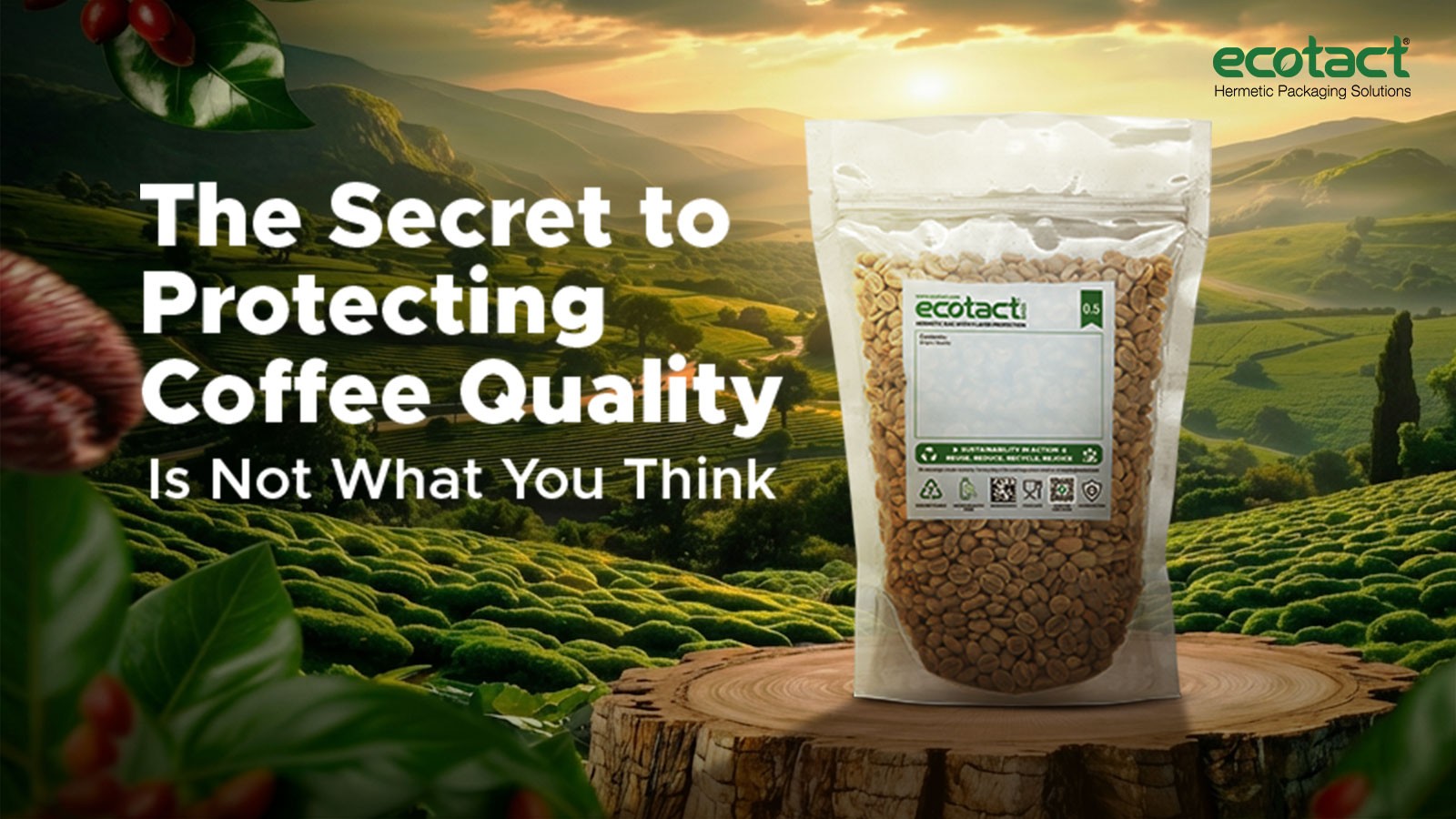
When you think about what makes a great cup of coffee, what comes to mind?
A skilled roaster, perhaps. Maybe a perfect brewing ratio or a fancy espresso machine. But what if the real secret to preserving coffee’s quality, its aroma, flavour, and soul, lies long before it reaches the roaster or your cup?
Because here’s the truth: coffee quality doesn’t just depend on how it’s roasted or brewed. It depends on how it’s protected after it’s harvested.
The Hidden Journey Between Farm and Cup
Every coffee bean begins its life as a cherry on a farm: nurtured, picked at the right ripeness, pulped, fermented, washed, and dried. Farmers dedicate months ensuring each bean develops its full potential. But somewhere between the drying patio and the roasting drum, much of that hard-earned quality quietly disappears.
Why? Because coffee is a living product, even after it’s dried. It continues to interact with its environment, absorbing moisture, oxygen, and odors. And unless it’s properly protected, these invisible exchanges start breaking down its delicate compounds.
This is where most misconceptions begin. Many believe that once the beans are dried and stored, the hard part is over. But in reality, post-harvest handling and packaging are where coffee’s true fate is sealed… literally.
The Silent Threats to Coffee Quality
Let’s break down the three biggest culprits behind quality loss:
1. Oxygen:
Oxygen is coffee’s quiet enemy. It reacts with the bean’s aromatic oils and flavour compounds, causing oxidation, just like how roasted nuts lose their crunch and aroma when left exposed. Even a little exposure can flatten coffee’s brightness and destroy its signature notes.
2. Moisture:
Coffee prefers consistency. When exposed to humidity fluctuations, beans absorb moisture, encouraging mold, fermentation, or even uneven roasting later. On the flip side, overly dry conditions cause the beans to lose volatile compounds that give coffee its aroma.
3. Temperature Swings:
Imagine a container of coffee traveling through different climates, from the humid tropics to the cold of international shipping routes. These shifts cause condensation, creating microclimates that can spoil coffee quality within days.
These are not minor details. They are the difference between a bean that tastes extraordinary and one that tastes… ordinary.
Why Traditional Packaging Isn’t Enough
Many producers and exporters still rely on jute bags, often lined with single-layer plastic. While jute is breathable (and traditional), that breathability is exactly what lets oxygen and moisture in.
Plastic liners help a little, but most are not fully airtight. Microperforations or weak seals still allow slow oxygen transfer, leading to gradual staling. In other words, traditional packaging can’t stop quality loss; it only delays it.
And when a container takes weeks to reach its destination, “a little air” can make a big difference. The beans arrive dull, with faded aroma and muted flavours, erasing the terroir that farmers worked so hard to preserve.
The Real Game-Changer: Post-Harvest Protection
This is where the conversation shifts. To truly protect coffee quality, producers must think beyond cultivation and roasting. They must master the science of preservation.
That means treating packaging as the final step of quality control, not an afterthought.
Because in a global coffee market that prizes traceability, cup profile, and freshness, how you store your beans is as important as how you grow them.
Enter hermetic packaging, a technology that’s quietly transforming the coffee world.
How Hermetic Packaging Changes Everything
The term “hermetic” means airtight. But in the coffee world, it goes beyond simple sealing. Hermetic packaging uses multiple barrier layers to block out oxygen, moisture, and pests, creating a stable micro-environment inside the bag.
This means no oxidation, no dampness, and no pest infestations. The beans remain in the same condition they were in on the day they were packed, even after weeks or months of transit.
Unlike traditional plastics, multi-layer hermetic bags combine materials with different permeability properties. Some layers resist moisture; others block oxygen or UV light. Together, they act like a shield that preserves every sensory characteristic, color, aroma, density, and flavour.
For specialty coffee producers, this is a revelation. It ensures that what a farmer tastes at origin is what a roaster experiences halfway across the world.
Why Freshness Is Non-Negotiable
Freshness is not a marketing buzzword. It’s the essence of what makes coffee special. At Ecotact, we believe freshness is non-negotiable. It’s not just about keeping beans safe, it’s about keeping them alive.
Our 9-layer hermetic packaging technology is built on this philosophy. Each layer performs a unique role in protecting coffee against the world’s harshest conditions: oxygen, moisture, and heat. The result? Beans that arrive as vibrant, aromatic, and flavourful as the day they were dried.
And while we won’t say we invented the idea of protecting coffee, we’ve certainly perfected how to do it.
Our bags are recyclable, food-safe, and tested across climates. They’re trusted by producers, exporters, and roasters who view packaging not as a sack, but as a science.
(Explore how Ecotact’s 9-layer hermetic technology safeguards coffee freshness.)
The Future of Coffee Lies Beyond the Roaster
The next time you enjoy a cup of coffee, remember its flavour didn’t just depend on who roasted it or how it was brewed. It depended on how it was protected after harvest.
From oxygen to moisture to careless handling, coffee faces an army of invisible threats. But with the right protection, those threats can be neutralized.
Great coffee isn’t just grown or roasted, it’s preserved.
And that’s the secret most people never think about.
At Ecotact, we call it our Passion for Freshness, because preserving coffee’s true flavour is not a step in the process. It is the process.