German
 English
 Spanish
 French
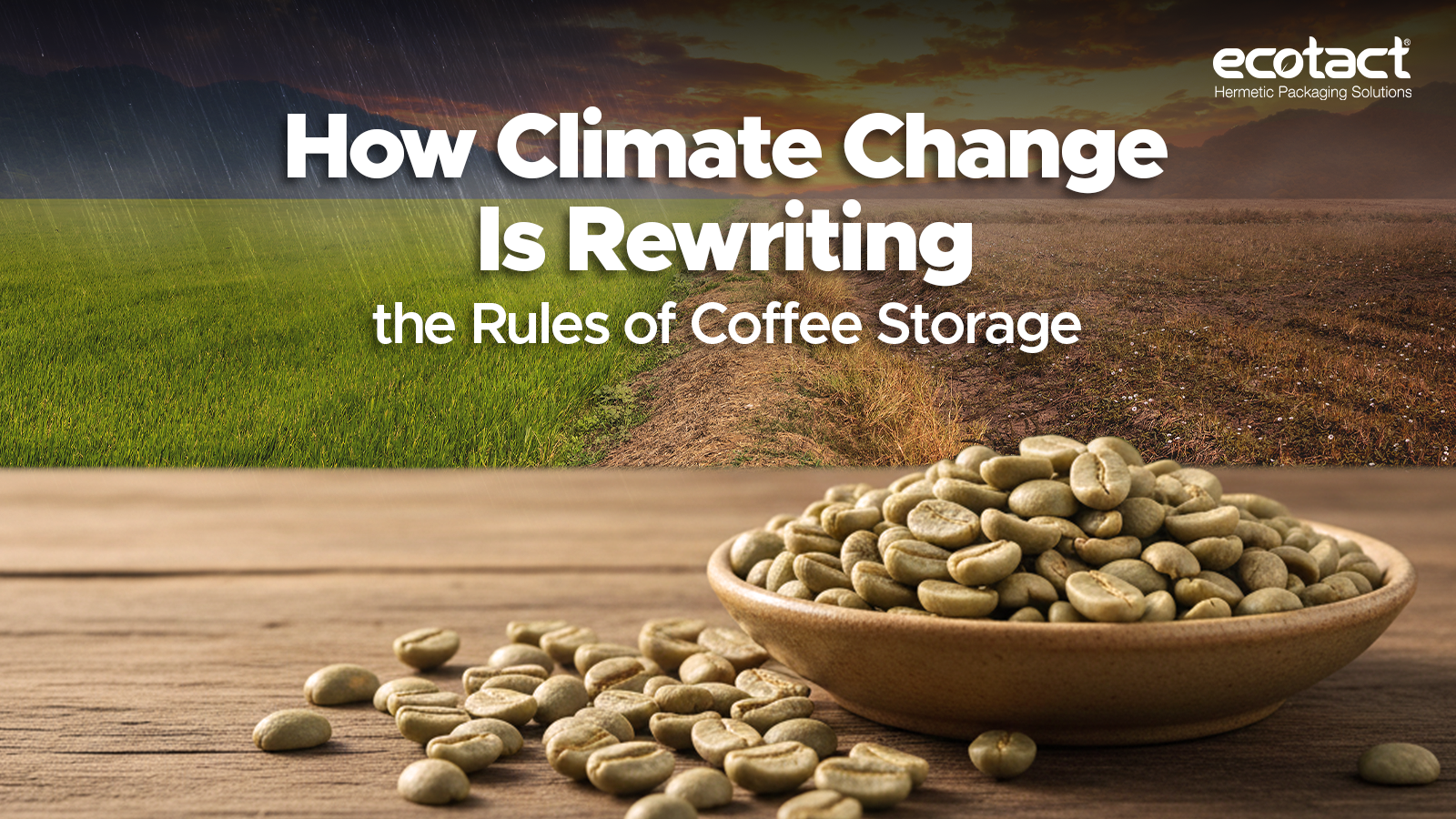
For decades, coffee storage followed a familiar set of rules. Keep green beans dry. Protect them from oxygen. Store them in stable temperatures. Move them efficiently from origin to destination.
But climate change is quietly and steadily rewriting those rules.
As weather patterns become more unpredictable, coffee-producing regions across Africa, Latin America, and Asia are facing new post-harvest challenges. Rising humidity, sharper temperature swings, and longer, more complex supply chains are changing not just how coffee is grown, but how it must be stored, protected, and transported.
In this new reality, storage is no longer a passive step between harvest and export. It has become an active, critical intervention point for preserving quality, value, and consistency.
Rising Humidity: The Invisible Threat
One of the most immediate impacts of climate change on coffee storage is increased humidity.
Many coffee origins are experiencing heavier rains, longer wet seasons, and higher ambient moisture levels, often extending well beyond harvest periods. For green coffee, this is a serious concern. Beans are hygroscopic by nature, meaning they readily absorb moisture from the surrounding environment.
Excess moisture can lead to:
- Mold growth and microbial contamination
- Uneven moisture content within lots
- Faster degradation of flavor compounds
- Reduced shelf life and export readiness
Traditional storage solutions, such as jute bags or basic liners, were never designed to handle prolonged exposure to high humidity. In these conditions, moisture ingress becomes inevitable, even in warehouses that appear dry at first glance. Climate volatility means that what was once a “safe” storage environment may no longer be reliable from one season to the next.
Temperature Swings and Thermal Stress
Alongside humidity, temperature instability is becoming increasingly common. Day-night temperature gaps are widening in many regions, and unexpected heat waves are affecting both on-farm storage and export warehouses. During transit, coffee may now encounter more extreme and fluctuating temperatures than ever before.
These shifts accelerate:
- Oxidation of lipids within the bean
- Loss of volatile aromatics
- Staling and flavor flattening
- Condensation inside packaging when temperatures fluctuate rapidly
When warm, moist air condenses inside a bag or container, even briefly, it can undo months of careful processing and handling. The result is coffee that arrives at the destination tasting older than it should, despite having been handled correctly upstream. Climate change has turned temperature from a background condition into a quality variable that must be actively managed.
Longer, More Complex Supply Chains
Climate disruption doesn’t stop at the farm. Delays caused by extreme weather events, flooded roads, port congestion, and shipping reroutes are extending storage and transit times. Coffee that once moved from origin to roaster in a predictable window may now spend weeks longer in warehouses or containers. The longer coffee sits, the more exposed it is to environmental stress.
This extended timeline magnifies every small vulnerability in storage:
- Minor oxygen exposure becomes cumulative oxidation
- Slight moisture ingress compounds over time
Packaging as Climate Adaptation
As climate conditions change, packaging is emerging as one of the most effective tools for adaptation.
Modern coffee storage now demands packaging that can:
- Create a stable internal environment regardless of external conditions
- Block oxygen and moisture consistently over time
- Withstand temperature fluctuations without compromising integrity
- Support both aerobic and anaerobic post-harvest processes
- This is where hermetic packaging has become increasingly essential.
By sealing coffee in controlled, oxygen-limited environments, hermetic solutions reduce the impact of humidity spikes and temperature swings. They allow coffee to retain its intended moisture content, slow oxidative reactions, and protect delicate flavor compounds, even when external conditions are far from ideal.
How Ecotact Supports Climate-Resilient Storage
Ecotact’s approach to packaging is rooted in the realities of modern coffee logistics and climate stress. Our 9-layer hermetically sealed bags are engineered to protect green coffee from oxygen, moisture, and contamination, three variables that climate change has made harder to control. By creating a stable micro-environment inside each bag, Ecotact helps ensure that coffee quality remains consistent from origin to destination.
For producers and exporters, this means:
- Reduced risk during high-humidity harvests
- Greater confidence in extended storage periods
- Protection during long sea voyages and unpredictable transit delays
Ecotact bags are also used across different post-harvest processes, including fermentation, drying, and storage. In anaerobic fermentation, for example, the ability to maintain an oxygen-free environment allows producers to achieve greater control and repeatability, something increasingly valuable as climate variability affects traditional fermentation timelines. In a changing climate, consistency is no longer accidental. It must be designed.
Explore our 9-layered hermetic packaging solutions and stay ahead of the climate changes.