German
 English
 Spanish
 French
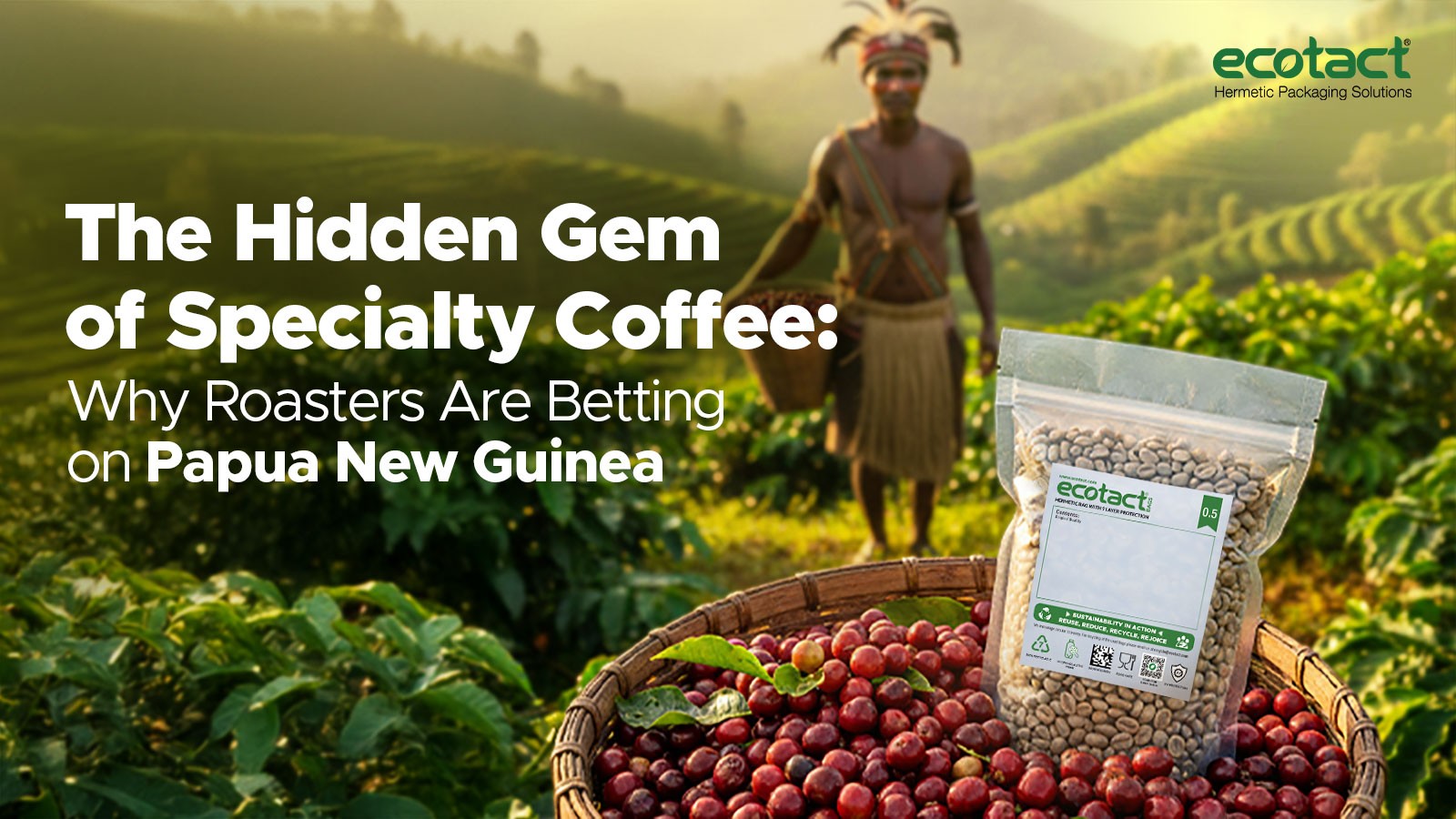
For years, coffee lovers have been chasing new and exciting flavours, from the highlands of Ethiopia to the jungles of Colombia. But lately, there’s a quiet buzz about an unexpected origin: Papua New Guinea.
Tucked away just north of Australia, this lush, mountainous island has become one of specialty coffee’s best-kept secrets. And if you ask roasters why, they’ll say the same thing: there’s no coffee quite like PNG’s.
Where It All Began
Coffee first arrived in Papua New Guinea in the late 1800s, when early traders brought Arabica plants from Jamaica’s famous Blue Mountains. Those plants adapted beautifully to PNG’s volcanic soil and cool mountain air, and the rest is history.
But what makes PNG special is not massive plantations or industrial farms… it’s people. Nearly 85% of the country’s coffee is grown by smallholder farmers, families who care for just a few hundred trees in their backyards.
These farmers handpick, hand-pulp, and sun-dry their beans on homemade drying racks, the same way their grandparents did. That human touch is part of what gives PNG coffee its soul.
A Land Like No Other
Imagine misty valleys, steep mountain ridges, and rainforests alive with bird calls. That’s where PNG’s coffee grows, in places like Mount Hagen, Goroka, and Jiwaka, often more than 1,500 meters above sea level.
The soil here is volcanic and rich, the weather cool and wet, and the landscape breathtakingly wild. All of this creates the perfect environment for slow-growing coffee cherries that develop intense flavours. And those flavours? They’re hard to describe with just one word.
The flavour Story: Wild, Sweet, and a Little Mysterious
PNG coffee is known for its balance of chaos and charm. It’s bright and fruity like a Kenyan, but with the earthy depth of an Indonesian. You might taste mango, chocolate, honey, and herbs, all in the same sip. Every region has its own personality: Eastern Highlands coffees often taste floral and tea-like. Western Highlands coffees lean toward chocolate, spice, and a syrupy body. And some micro-lots from Jiwaka can surprise you with notes of pineapple or red wine. Coffee expert James Hoffmann once said PNG’s coffee “feels alive, like it’s still evolving in the cup.” That’s exactly what keeps roasters coming back for more.
A Culture That Breathes Coffee
Coffee isn’t just a crop in PNG, it’s a livelihood and a way of life. Walk through any highlands village during harvest season, and you’ll see coffee cherries drying on bamboo mats beside homes, kids helping their parents wash beans, and neighbors gathering to discuss the market prices over a fire.
More than 2.5 million people depend on coffee for income. It’s what helps families pay school fees, buy essentials, and keep their communities running. Despite challenges like poor roads and limited access to resources, the pride in their coffee is unmistakable. And that pride shows up in the cup.
Challenges That Shape Its Character
Getting coffee out of Papua New Guinea isn’t simple. Many farms are so remote that the beans have to travel by small trucks, boats, and sometimes even on foot, to reach export warehouses near the coast. Add in the tropical humidity, and you can see why keeping coffee fresh is such a challenge.
Humidity and oxygen are coffee’s biggest enemies. Even the best beans can lose their delicate aroma and sweetness during long transport if not protected properly. That’s where hermetic packaging becomes a quiet hero.
Why Packaging Matters More Here Than Anywhere Else
Roasters often talk about flavour and terroir, but not enough about what happens after the harvest. Coffee from PNG often travels through long, humid journeys before it even reaches a roaster’s hands. That’s why using high-barrier, multi-layer hermetic packaging is essential.
It prevents moisture and oxygen from sneaking in, keeps out unwanted odors, and allows carbon dioxide to escape, all while locking in those precious fruity and chocolatey notes that define PNG coffee. In a country where freshness can make or break the final cup, this kind of protection isn’t just smart, it’s non-negotiable.
The Future Looks Bright and Bold
Papua New Guinea’s coffee industry is in an exciting place right now. You’ll find local cooperatives investing in better washing stations, sustainability projects that reward quality, and more global roasters paying fairer prices for micro-lots. In a world obsessed with traceability and authenticity, PNG has both in abundance.
It’s raw, real, and full of character, much like the people who grow its coffee.
And as more roasters discover this hidden gem, PNG is stepping out of the shadows to claim its place among the world’s most celebrated origins.
In Every Sip, a Story
Papua New Guinea isn’t just a spot on the coffee map, it’s a story of people, mountains, and resilience. It’s a reminder that behind every cup, there’s a journey. One that begins in misty highlands and ends in your morning brew, perfectly preserved in its freshest form.
So the next time you see “Papua New Guinea” on a coffee bag, give it a try. You might just taste the adventure, the history, and the heartbeat of a land that’s quietly redefining what great coffee can be.