German
 English
 Spanish
 French
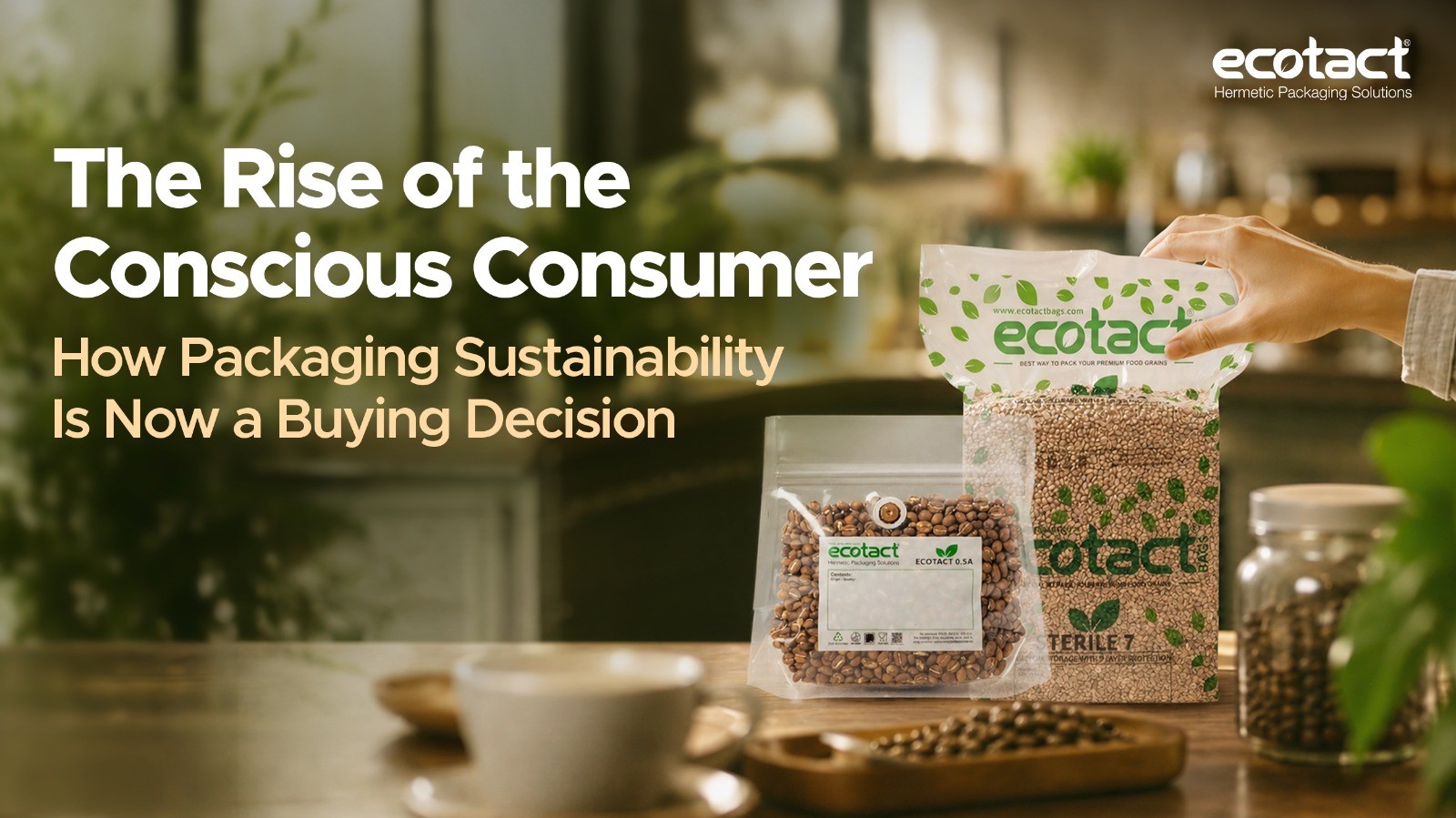
A few years ago, packaging was mostly judged by two things: how it looked and how well it protected the product.
Today, consumers are asking a different question: “What impact does this packaging leave behind?”
From supermarket shelves to specialty coffee stores, sustainability is no longer a niche conversation. It has become part of the buying decision itself. And nowhere is this shift more visible than among Gen Z and millennial consumers.
These audiences are reading labels more closely, questioning packaging materials, and actively supporting brands that align with their environmental values.
At Ecotact, this shift reflects something we have always believed: packaging should not only protect products it should also protect the future they move through. Because freshness and responsibility can no longer exist separately.
Consumers Are Paying Attention to Packaging
Sustainability is influencing purchasing behavior more than ever before. According to a global study by IBM and the National Retail Federation, nearly 70% of consumers in the U.S. and Canada say sustainability is important when making a purchase, with younger consumers leading this shift.
Gen Z and millennials are especially conscious of recyclable materials, plastic reduction, carbon footprint claims, and packaging transparency.
In many cases, packaging itself has become a trust signal. Consumers increasingly see sustainable packaging as a reflection of how responsibly a brand operates overall.
Packaging Is Now Part of Brand Perception
Today’s consumers do not separate packaging from the product experience. A sustainably sourced coffee packed in excessive or non-recyclable material creates a disconnect.
This is why brands across food, beverage, and specialty coffee are rethinking how packaging communicates values at first glance.
Research from McKinsey found that products making ESG-related claims accounted for 56% of all growth in studied consumer categories over a five-year period.
Packaging plays a major role in that perception because it is often the first physical interaction consumers have with the brand.
Simple details now influence buying decisions: recycled content labels, recyclability instructions, carbon labelling, reduced material usage, and sustainable sourcing claims.
Purchase decisions increasingly reflect whether a brand’s operational choices match its sustainability claims.
The Shift Is Happening in B2B Too
This change is not limited to retail shelves. Importers, roasters, exporters, and distributors are also facing growing sustainability expectations from global buyers.
Increasingly, procurement teams are evaluating packaging waste, recyclability, carbon impact,
and long-term sustainability goals alongside quality and price.
In coffee supply chains, packaging choices increasingly influence procurement discussions around waste reduction, freight efficiency, storage performance, and alignment with buyer sustainability targets.[b]
Ecotact has seen this shift firsthand across global coffee markets. Buyers today are looking for packaging systems that not only preserve freshness but also support broader sustainability commitments across the supply chain.
Carbon Labeling Is Becoming More Visible
Consumers increasingly want measurable sustainability information. Carbon labels, which show the estimated carbon footprint of a product or package, are becoming more common across global retail markets.
According to research by Carbon Trust, two-thirds of consumers want brands to clearly communicate environmental impact information. (Source)
This demand is pushing brands toward lifecycle assessments, carbon reporting,
and greater packaging transparency. While carbon labeling in coffee is still evolving, the expectation for transparency is already here.
And brands that communicate sustainability clearly are often building stronger long-term trust with consumers.
Conscious Consumption Is Here to Stay
Sustainability is no longer a trend added onto branding campaigns. It is becoming part of how consumers evaluate trust, quality, and responsibility. And packaging now sits at the center of that conversation.
The brands that will stand out moving forward are not simply the ones making sustainability claims. They are the ones building systems that consistently support those claims across the entire journey.
At Ecotact, every layer, liner, and hermetic solution is designed with one purpose: helping coffee travel further with its freshness, quality, and value intact. Because protecting coffee from oxygen, moisture, and transit stress doesn’t just reduce waste, it helps exporters ship with confidence, roasters maintain consistency, and producers protect the work behind every harvest.