French
 English
 Spanish
 German
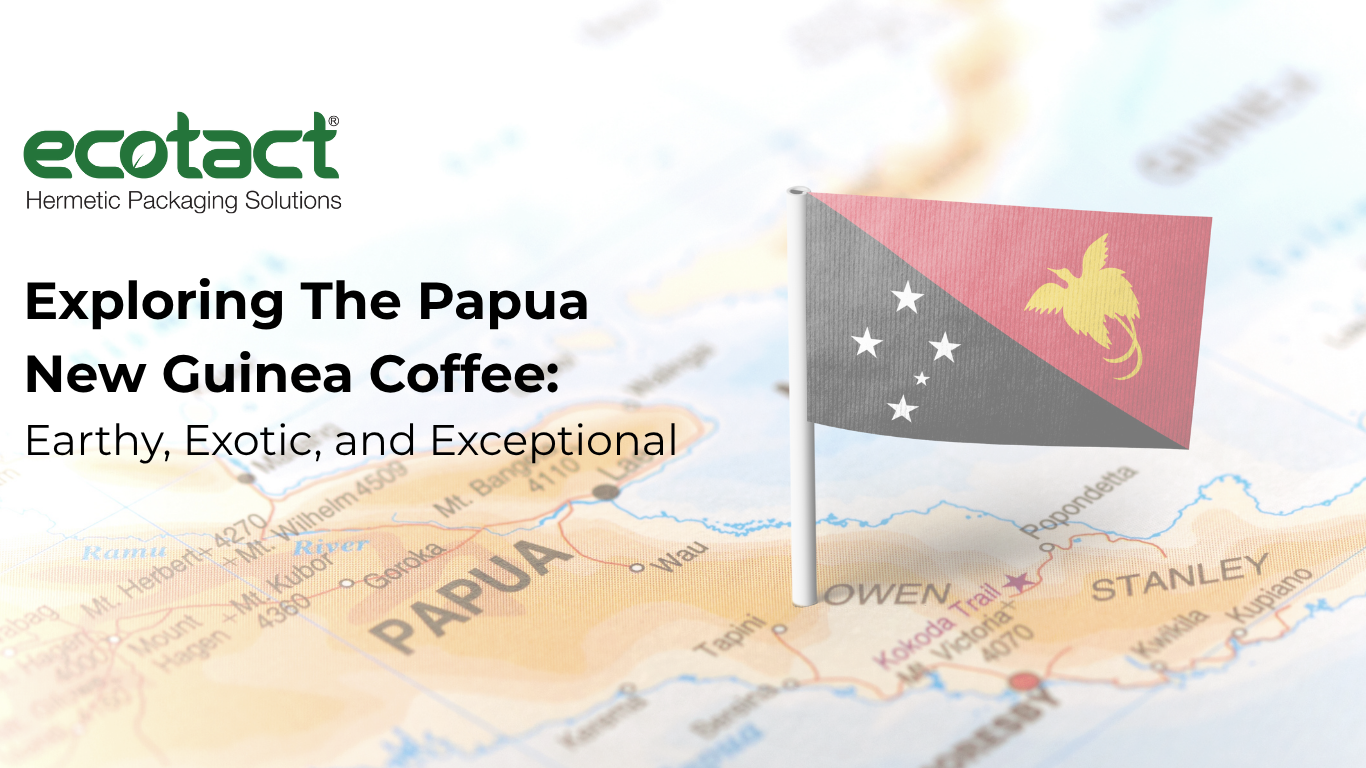
Popularly known as New Guinea or "PNG", coffee here is grown on the eastern half of the island of New Guinea, just North of Australia, known as Papua New Guinea. In fact, after oil palm, coffee production in Papua New Guinea is the country’s second-largest agricultural export. The coffee production employs approximately 2.5 million people while it accounts for approximately 1% of world production, according to the United Nations Conference on Trade and Development (UNCTAD). With low-toned and earthy richness, the nation’s coffee has always been loved across the world. In this blog, let's explore more about the PNG coffee, its characteristics, and how these premium green coffee beans must be stored in hermetically sealed coffee bags, as of Ecotact, so that they stay fresh.
History of PNG Coffee
Coffee originated in Papua New Guinea during the 1920s. European settlers, especially Australians, brought Arabica plants to the country. These were first grown in the Eastern Highlands, where the cool climate and high elevation made growing conditions ideal. At the time, most coffee was grown on large plantations run by colonists. Local people had very little role in the industry. The scenario started to change in the 1950s and 60s. As the government encouraged local farmers to grow coffee, it became an important source of income for rural families. Many people started planting coffee in their backyard gardens. Today, over 80% of PNG’s coffee comes from smallholder farms. These farms are generally found in rich volcanic soils at high up in the mountains. In such conditions, the quality of the beans is naturally enhanced.
Papua New Guinea’s coffee is mainly grown in the mountain highlands. One of the most important areas is Mt. Hagen which is popular for its rich volcanic soil and ideal climate for growing coffee. What sets PNG coffee apart is the way it’s grown. Most farmers follow traditional methods and stay away from synthetic inputs. The farming is often organic and natural. The region’s rich biodiversity also plays a key role. It shapes a special environment that gives the beans their distinct flavor. The country’s coffee is well-regarded across the world for its unique taste and is becoming more popular among specialty roasters.
Characteristics of PNG Coffee
It has a deep, smooth richness with a hint of earthiness at times. The acidity of the beans is low to moderate, making it easy to drink. Most of the beans are wet processed. This method brings out a light sweetness and a gentle, fruity aroma. The flavor is mellow but full, with a nice balance. It feels clean and bright on the palate. The beans also contain natural oils. These oils start to appear even at a medium roast. They give the coffee a full body and rich texture.
PNG grows many well-known coffee varieties. These include Blue Mountain, Catimor, Caturra, and Mundo Novo. Another important variety is Arusha. It is a type of Arabica and is believed to come from the Typica or French Mission line. PNG coffee stands out for its fruity taste. One can sometimes experience bright taste notes of pineapple, papaya, or passionfruit. Some beans also carry the slight taste of peach or apricot and it adds a sweetness and depth to the flavor. To maintain its integrity, it must be stored in hermetically sealed coffee bags that keep it fresh. Let’s understand this more.
Ecotact - Your Optimum Packaging Solution For PNG Coffee
Looking at the remote origins and long transit times of PNG coffee, it’s essential to use packaging that safeguards the beans from moisture, mold, and environmental damage. Ecotact’s hermetically sealed coffee bags offer the optimum solution. It preserves quality, extends shelf life, and ensures every bean reaches its destination just as fresh as the day it was harvested. How? With its 9-layered hermetic packaging, it offers a reliable solution to preserve the freshness of green coffee beans, cacao beans, and other grains. With 25 M+ bags sold, it offers eco-friendly green coffee packaging that is 100% recyclable and reusable. Ecotact bags are hydrocarbon-free, have high-temperature tolerance, and keep aroma and moisture levels maintained. Moreover, it increases the shelf life of green coffee beans without any use of pesticides and insecticides. Having recycling solutions monitored globally, Ecotact bags protect flavor and quality.
If you want to safeguard your specialty coffee to its best, visit Ecotact now!
FAQs
Why is Papua New Guinea considered a unique coffee origin?
The distinctive flavor of Papua New Guinea coffee results from its cultivation in high-altitude areas that possess volcanic soil, which imparts strong mineral and earthy notes to the coffee beans. The combination of traditional farming techniques with multiple microclimate conditions creates unique flavor profiles that differentiate this product from other coffee origins.
What challenges does Papua New Guinea coffee face during export?
The remote mountainous regions produce PNG coffee, which creates challenges for logistics. The extended transportation distances together with the unreliable transportation network expose coffee beans to both heat and humidity and the physical damage caused by handling. The process results in higher chances of coffee quality degradation before the product reaches roasters.
How do origin conditions influence PNG coffee flavor?
The flavor profile of PNG coffee is shaped by its high elevation, volcanic soil, and rainforest climate. These factors create a taste that combines Earthy and Spicy elements together with balanced Acidity andmultiple layers of fruit flavors. The natural environment also supports slower bean development which produces more complex coffee flavors.
Why is freshness preservation critical for remote coffee origins?
The delivery schedule for remote origins such as PNG results in extended shipping periods because of increased exposure to diverse climatic conditions. The beans experience oxidation and moisture absorption because they lack proper freshness preservation, which results in diminished aroma and flavor. The preservation of freshness protection ensures that the original taste profile from its specific origin remains intact.
How can packaging help protect delicate specialty coffee profiles?
High-barrier, hermetic packaging creates an airtight seal which stops oxygen and moisture from entering the bag. The packaging solution enables specialty coffees to maintain their delicate flavor elements through effective protection of aroma and acidity and complete cup quality during extended storage and shipping.