French
 English
 Spanish
 German
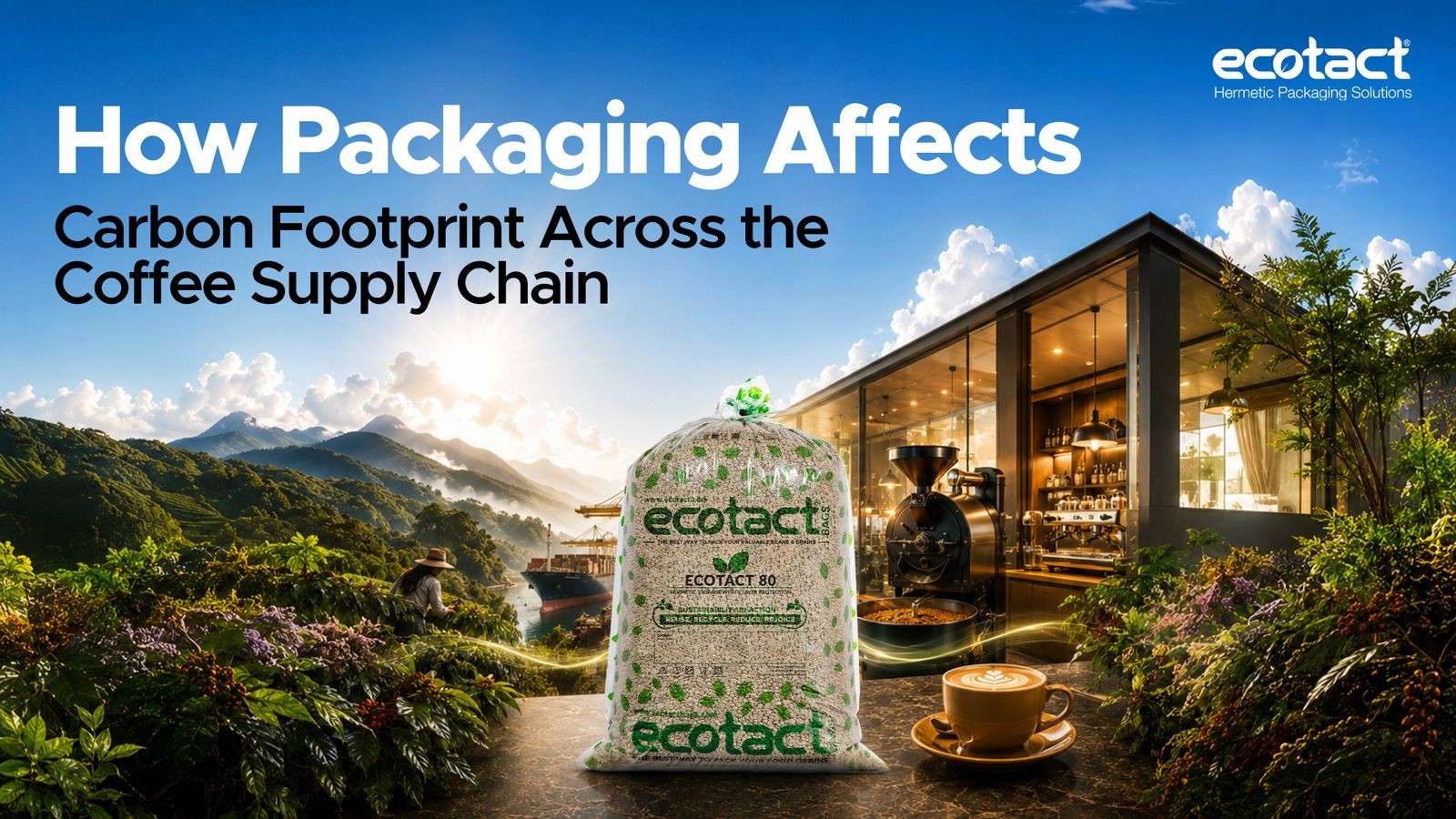
Coffee travels far before it reaches the cup. From farms and washing stations to exporters, roasters, warehouses, cafés, and homes, every stage of the journey leaves an environmental footprint behind.
And while conversations around sustainability often focus on farming or transportation, packaging plays a much bigger role than most people realize. The materials used, the weight carried, the ability to preserve freshness, and even how efficiently coffee moves through transit all influence the carbon footprint of the supply chain.
At Ecotact, sustainability has always been connected to one simple belief: protecting freshness should also help protect the future. Because packaging should not only move coffee safely. It should help reduce waste, extend shelf life, and support a more responsible coffee ecosystem.
Looking at Packaging Through a Lifecycle Lens
A lifecycle analysis looks at the environmental impact of a product from beginning to end: material sourcing, manufacturing, transportation, usage, reuse, and recycling or disposal. In coffee logistics, packaging affects more than just storage. It influences product loss, shipment efficiency, spoilage reduction, and long-term waste generation.
Research shows that the global coffee supply chain contributes approximately 135-178 million tonnes of CO₂e annually, accounting for nearly 1% of global food-sector emissions. That makes every efficiency improvement across the supply chain meaningful, including packaging.
The Biggest Sustainability Problem? Waste
One damaged shipment can carry a much larger environmental impact than the packaging itself. When coffee loses freshness due to oxygen exposure, moisture ingress, or poor storage conditions, the waste extends far beyond the beans. It also means wasted water used during cultivation, wasted transportation emissions, wasted processing energy, and wasted labor across the supply chain.
This is why freshness protection matters from a sustainability perspective. Ecotact’s 9-layer hermetic packaging technology is designed to minimize oxygen and moisture exposure during storage and transit, helping coffee maintain stability across long export cycles. Because sometimes, the most sustainable packaging is the one that prevents product loss in the first place.
Packaging Weight Directly Impacts Transport Emissions
Coffee is one of the world’s most globally traded agricultural products. And every extra kilogram shipped adds to fuel consumption and transport emissions. Heavier packaging systems increase freight weight, shipping costs, and carbon output across large export volumes. This is why modern coffee packaging increasingly focuses on balancing barrier protection, durability, and lightweight efficiency.
Ecotact packaging systems are engineered to provide high-performance hermetic protection without unnecessary bulk, helping optimize container efficiency during transit. Even small improvements matter at scale. When thousands of bags move across oceans every day, reducing packaging weight can create measurable carbon savings over time.
Shelf Life Is Also a Sustainability Strategy
Freshness and sustainability are more connected than they appear. When coffee remains stable for longer:
- Fewer shipments are rejected.
- Replacement logistics are reduced.
- Inventory losses decrease.
- Supply chains operate more efficiently.
Studies show that a standard bag of roasted coffee can carry a lifecycle footprint ranging from 1.25 to 2.5 kilograms of CO₂ equivalent, depending on sourcing, transportation, roasting, brewing, and packaging systems. Protecting that coffee from spoilage helps protect all the emissions already invested into producing it.
Ecotact’s hermetic packaging solutions are built to extend shelf life while maintaining aroma, moisture balance, and product quality across changing transit conditions. Because every shipment saved from spoilage is also a shipment saved from unnecessary environmental cost.
Packaging Is a Small Percentage, But a Powerful Lever
Packaging may contribute a smaller share of coffee’s total carbon footprint compared to farming and land-use emissions, but it remains one of the few areas directly controlled by roasters, exporters, and supply chain partners.
That makes it an important opportunity for change. The right packaging choice can:
- Reduce spoilage
- Improve transport efficiency
- Support reuse
- Extend shelf life
- Lower waste across the coffee journey
At Ecotact, sustainability is approached through this wider lens not just through materials alone, but through packaging systems designed to preserve quality, reduce loss, and support a more resilient future for coffee. Because freshness protected responsibly creates impact far beyond the bag itself.
Final Thoughts
Sustainability in coffee is rarely shaped by one big decision. More often, it is built through smaller choices repeated consistently across the supply chain.
- How coffee is protected.
- How efficiently it travels.
- How much waste is prevented along the way.
Packaging may sit quietly in the background of the coffee journey, but its impact travels much further than most people realize.
And with the right systems in place, protecting freshness can also become part of protecting the future.
#PassionForFreshness