French
 English
 Spanish
 German
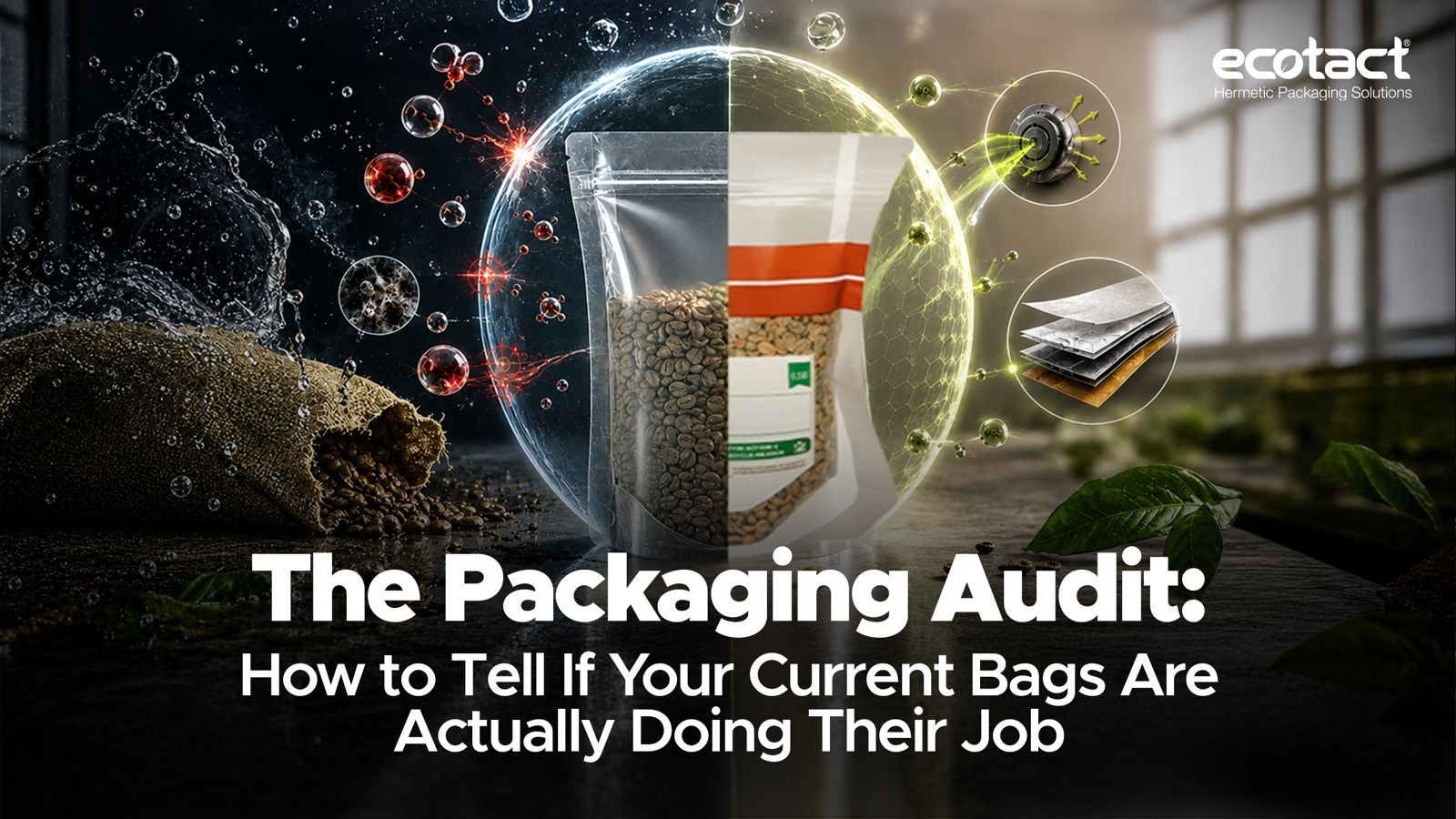
For roasters and importers, packaging often fades into the background. Once the coffee is sealed, shipped, and stacked, the assumption is simple: the bag will do its job.
But freshness loss rarely happens all at once. It shows up as slowly muted aromatics, inconsistent roasts, faded cupping scores, or customers quietly moving on to another coffee. And more often than not, the issue is not the coffee. It’s the packaging.
A good packaging audit is not about finding faults. It is about understanding whether your packaging is truly protecting the quality you worked hard to build. At Ecotact, this belief sits at the center of everything we do with #PassionForFreshness. Because preserving freshness is not passive, it is engineered with care.
Here’s a practical guide to evaluating whether your current bags are actually doing their job.
1. Start with Oxygen Transmission Rate (OTR)
If freshness has an enemy, it is oxygen. Exposure to oxygen speeds up oxidation, causing coffee to lose aroma, flavor clarity, and shelf stability over time. That is why barrier packaging matters. This is where Oxygen Transmission Rate (OTR) becomes important. OTR measures how much oxygen passes through a packaging material over time. The lower the OTR, the stronger the barrier protection.
High-barrier solutions like Ecotact’s 9-layer hermetic packaging are designed to minimize oxygen ingress and help coffee stay stable from origin to destination.
Quick Audit Questions:
- Is your packaging supplier sharing verified OTR specifications?
- Are those values independently tested?
- Has the material changed due to sourcing or cost optimization?
2. Inspect Seal Integrity Closely
Even the best barrier material fails if the seal is inconsistent. Tiny seal failures are one of the most common and overlooked causes of freshness loss during transit and storage.
A weak seal can allow the following:
- Oxygen ingress
- Moisture exposure
- Aroma leakage
- Contamination risk
Signs Your Seals May Be Failing:
- Wrinkled or uneven seal lines
- Pinholes near the seal area
- Delamination at corners
- Bags slowly losing firmness over time
- Small bursts during shipment
Consistency matters more than perfection. One weak seal across a shipment can compromise an entire batch.
3. Check Whether the Valve Is Actually Working
The one-way degassing valve may be small, but it plays an important role in freshness protection. Freshly roasted coffee naturally releases carbon dioxide (CO₂) after roasting. Without a proper outlet, pressure can build inside the bag. Degassing valves solve this by allowing CO₂ to escape while preventing oxygen from entering. But not all valves perform equally. (Source: PackageTheWorld)
Things to Audit:
- Is the valve opening correctly under pressure?
- Is it resealing properly afterwards?
- Is valve placement optimized?
- Are bags inflating excessively during transit?
Lightly press a freshly packed coffee bag near the valve. A functioning valve should release CO₂ without allowing external air back in. A noticeable aroma release can also indicate freshness retention. If bags stay bloated for too long or collapse unusually early, it may point to valve or sealing inconsistencies.
Ecotact’s valve-compatible packaging solutions are designed to balance degassing with barrier protection helping freshness stay where it belongs.
4. Watch for Packaging Fatigue During Transit
Packaging may perform well in the warehouse and still fail in transit. Coffee journeys are long. Containers experience pressure fluctuations, temperature shifts, humidity changes, and so much more. Over time, weak packaging structures begin to show fatigue.
A packaging audit should include reviewing the following:
- Returned damaged bags
- Transit complaints
- Shelf-life inconsistencies
- Storage performance across climates
Because sometimes the issue isn’t visible until the coffee reaches another continent.
5. Ask the Bigger Question: Is the Packaging Supporting the Coffee’s Future?
Good packaging should do more than contain coffee. It should help protect the producer’s work, the importer’s reputation, the roaster’s craft, and the customer’s experience.
As buyer expectations rise and quality standards evolve, packaging is no longer just a final step. It is part of quality protection itself. And the best packaging audits happen before freshness becomes a problem
Final Thoughts
Freshness loss is rarely caused by one major failure. More often, it comes from small compromises that quietly add up over time. A proper packaging audit helps identify those risks early before they affect cup quality, customer trust, or consistency.
Because when packaging works well, nobody notices it. The coffee simply arrives as it should. And that quiet reliability is exactly what Ecotact is built to protect.