German
 English
 Spanish
 French
At Ecotact, we believe that freshness begins at origin, with knowledge, collaboration, and care.
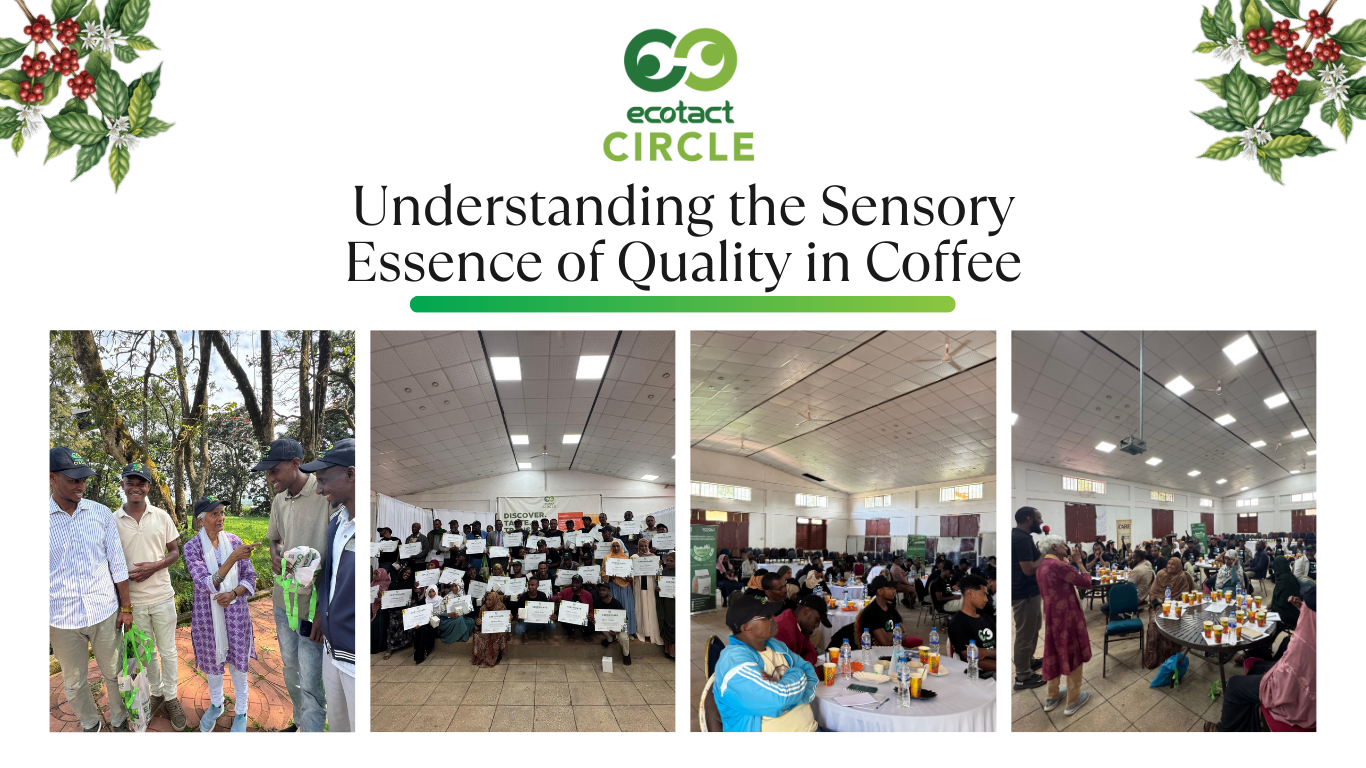
We put this belief into action with the Ecotact Circle Coffee Training program, “Understanding the Sensory Essence of Quality in Coffee,” held at the Gera, Jimma, in collaboration with Addis Exporter.
The two-day hands-on training, led by the legendary Ms. Sunalini Menon, brought together 37 participants, including 12 inspiring women coffee farmers and 2 international attendees from Korea, all eager to explore what truly defines quality in coffee.
From Theory To Touch- An Experiential Learning
The program’s philosophy centered on active participation, scientific reasoning, and real-world application rather than rote learning. Through detailed theory sessions and practical exercises, farmers were demonstrated coffee cupping techniques and were taught how fermentation time, washing methods, companion planting, and post-harvest practices directly influence coffee flavor, aroma, and overall quality.
Participants also learned how effective post-harvest storage practices can extend the shelf life of green coffee beans and maintain freshness throughout their journey from farm to cup - a focus area central to Ecotact’s mission.
“We trust that the farmers gained from this exposure to the latest trends in Post Harvest Processing vis-a-vis the quality of coffee, both visually and in the cup. It was heartening and inspiring to note the eagerness with which the farmers understood and grasped the information that was provided during the training programme” - Ms. Sunalini Menon, Asia’s first woman professional coffee taster and Director of SCA.

Culture & Collaboration
Hosted at a local community hall, the event embodied local ownership and togetherness. Despite language barriers, the participants’ enthusiasm created a universal language of learning and connection. The training closed with heartfelt cultural exchanges- gifts, smiles, and even a spontaneous rendition of a Bollywood song by a participant that brought joy and laughter to the room.
“Ecotact Circle is more than a training program. It’s a platform to share knowledge, empower communities, and celebrate the people whose hands bring coffee to life.” - Hanuman Jain, Founder and CEO, Ecotact.

Empowering Origins, Shaping a Fresher Future
Empowering origins means equipping farmers and processors with the right knowledge, skills, and scientific understanding to strengthen the very foundation of the coffee industry. Through this maiden initiative, we’ve taken a step towards building a supportive community of passionate producers who care as deeply about quality as we do about preserving freshness. As a farmer-friendly brand, we aim to continue creating spaces that nurture coffee communities that drive the industry forward.